
The Maxwell Intelligence Continuum: Robert to Ghislaine
Beyond the Epstein Files and into the Shadow Network known as the 'Octopus'

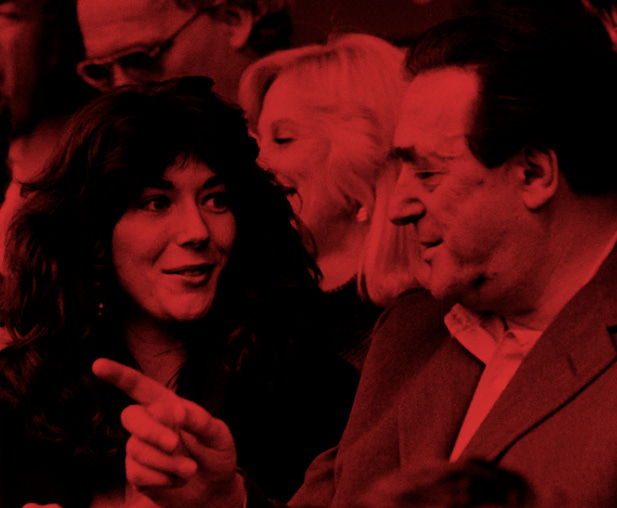
WHO ARE THE MAXWELLS?
Robert Maxwell (1923–1991)
Born Ján Ludvík Hyman Binyamin Hoch in Czechoslovakia, Robert Maxwell was one of the 20th century’s most audacious figures — a Holocaust survivor, decorated British Army officer, Labour Member of Parliament, and media baron who built a publishing empire spanning multiple continents. He owned the Daily Mirror, Macmillan Publishers, and Pergamon Press, among dozens of other enterprises. But beneath the public persona of the self-made billionaire lay something far more complex: a man who, by the assessments of multiple intelligence agencies across multiple countries, served simultaneously — or at various points — as an asset, operative, or facilitator for British intelligence (MI6), Soviet intelligence (KGB), Israeli intelligence (Mossad), and possibly others. His was not loyalty to a flag but to access, leverage, and survival.
Ghislaine Maxwell (1961–present)
The youngest daughter of Robert Maxwell, Ghislaine was his acknowledged favorite and, many argued, the child most shaped in his image. Educated at Balliol College, Oxford, she inherited her father’s social ambition, his gift for ingratiation with power, and — according to prosecutors, investigators, and intelligence analysts — certain operational relationships and methods. After her father’s death in 1991, she relocated from London to New York, where she became the social partner, then operational associate, of Jeffrey Epstein. In 2021 she was convicted on federal charges of sex trafficking of minors and related crimes. She is currently serving a 20-year sentence. The question of what intelligence apparatus, if any, surrounded her operations with Epstein has never been fully resolved in public record.
PART ONE: ROBERT MAXWELL — THE INTELLIGENCE CAREER
1940s — Origins in the Intelligence World
Maxwell’s intelligence connections began almost at the moment he entered Western society. After escaping occupied Czechoslovakia and fighting with the Czech resistance and later the British Army, he was recruited into British intelligence operations in postwar Germany. Working under the British Field Security Service, he was involved in denazification operations and the extraordinary chaos of postwar Berlin — a city where every intelligence service was recruiting, trading, and manipulating assets simultaneously.
It was in this environment that Maxwell made his first critical business and intelligence acquisition: he negotiated the rights to distribute scientific journals produced by Springer Verlag, a German academic publisher. This was not simply a commercial transaction. The distribution of scientific and academic publications across the Iron Curtain became, during the Cold War, one of the most productive vectors for intelligence exchange, recruitment, and technical espionage. Maxwell’s Pergamon Press became the vehicle through which this occurred.
Notation — Pergamon Press: Intelligence analysts and investigative journalists, most prominently Seymour Hersh in The Samson Option (1991), identified Pergamon Press as a conduit Maxwell used to facilitate relationships with Soviet scientific establishments, giving him unusual access to Soviet scientists, officials, and, by extension, intelligence services. The Soviets valued Maxwell as a back-channel to the West; Western services valued him as a back-channel to the East. He appears to have profited from both sides of this arrangement — commercially and operationally.
1950s–1960s — Building the Empire and the KGB Connection
Through the 1950s and 1960s Maxwell built Pergamon into a genuinely significant academic publishing house while simultaneously deepening his political connections in Britain. His relationship with Soviet intelligence during this period is the most extensively documented of his intelligence associations. KGB defector Vasili Mitrokhin’s archive, partially published in The Mitrokhin Archive by Christopher Andrew, identified Maxwell as an agent of influence for the KGB, given the codename KOLYA. His role appears to have been less that of a traditional spy passing documents and more that of an influence operator — someone who shaped narratives, facilitated introductions, and moved information in ways useful to Soviet interests.
Simultaneously, he maintained his British connections. The precise nature of his MI6 relationship has never been officially declassified, but multiple former intelligence officers quoted in investigative accounts have described Maxwell as an “agent of influence” for British intelligence as well — meaning both services were, to varying degrees, aware of and using him, and Maxwell was aware of being used and managing both relationships for his own benefit.
1970s–1980s — The Israeli Connection and PROMIS
The most consequential intelligence relationship Maxwell developed, and the one most directly relevant to what came after his death, was with Israeli intelligence — specifically Mossad.
Maxwell had deep emotional and political ties to Israel. He was a significant donor to Israeli causes and cultivated close relationships with Israeli political and military leadership. But the relationship with Mossad went beyond philanthropy. The key figure in this connection was Rafi Eitan, a legendary Mossad operations chief best known for leading the team that captured Adolf Eichmann in Argentina in 1960. By the 1980s, Eitan was running a special intelligence unit called the Scientific Liaison Bureau (LAKAM), which focused on acquiring foreign technology — particularly American military and intelligence technology — for Israel.
Notation — The PROMIS Software Affair: This is the pivotal operational moment connecting Robert Maxwell to a global intelligence scandal with direct relevance to the Epstein network years later.
PROMIS (Prosecutor’s Management Information System) was software developed by the American company Inslaw Inc. for the U.S. Department of Justice. It was an extraordinarily powerful case management and data tracking system for its era. According to investigators, journalists (primarily from The Village Voice and Wired), and congressional testimony, U.S. intelligence agencies, working with or alongside Israeli intelligence, stole the PROMIS software, inserted a backdoor into it, and then sold the modified version to intelligence agencies, banks, and governments around the world. The backdoor allowed U.S. and/or Israeli intelligence to monitor everything those foreign agencies were tracking.
Robert Maxwell was identified by multiple sources — including former Mossad officer Ari Ben-Menashe, who testified and wrote about this at length — as a key salesman and distributor for the modified PROMIS software. His publishing empire gave him legitimate, welcomed access to governments, intelligence agencies, and academic institutions worldwide. He could sell software under a commercial pretext where a spy could not go. Maxwell allegedly sold modified PROMIS to, among others, the Canadian Royal Mounties (RCMP), various Eastern Bloc intelligence services, and potentially others.
Ari Ben-Menashe, whose accounts have been disputed but never fully discredited, stated in his memoir Profits of War that Maxwell was a full Mossad asset by the 1980s and was deeply involved in the PROMIS distribution operation.
1986 — The Mordechai Vanunu Affair
In 1986, Israeli nuclear technician Mordechai Vanunu provided the Sunday Times with detailed evidence of Israel’s secret nuclear weapons program. Before the story could destabilize Israel’s official policy of nuclear ambiguity, Mossad moved to neutralize Vanunu. He was lured from London to Rome by a female Mossad agent, kidnapped, drugged, and returned to Israel for trial.
Robert Maxwell’s role in this affair remains murky but was noted by investigators. Maxwell, as owner of significant British press properties and a man with deep Israeli intelligence connections, is believed to have been aware of and potentially facilitated aspects of the Vanunu operation — specifically, there are suggestions he may have helped tip Mossad to Vanunu’s whereabouts in London. This has never been conclusively proven but forms part of a pattern of Maxwell serving Israeli intelligence operational needs.
Late 1980s — Financial Collapse and Increasing Desperation
By the late 1980s, Maxwell’s business empire was collapsing under the weight of debt, fraud, and poor acquisitions. He had illegally raided the pension funds of his Mirror Group employees to the tune of approximately £460 million to prop up his businesses. He was deeply in debt to banks across Europe. His financial crimes were about to unravel.
This desperation, many analysts believe, made him both more valuable and more dangerous to his intelligence handlers. A man with his knowledge of operations, assets, and transactions across multiple services — who was now in financial freefall — represented either an asset to be protected or a liability to be managed.
November 1991 — Death at Sea
On November 5, 1991, Robert Maxwell’s body was found floating in the Atlantic Ocean near the Canary Islands. He had apparently fallen from his yacht, the Lady Ghislaine — named after his youngest daughter.
The official Spanish autopsy concluded he died of heart failure and accidental drowning. A second autopsy, commissioned by the Maxwell family, found evidence inconsistent with simple accidental drowning. No definitive cause of death was ever established.
The Conspiracy and Controversy Around His Death:
The circumstances of Maxwell’s death generated immediate and sustained speculation for several reasons:
The timing was almost impossibly convenient. Maxwell was days or weeks away from the complete exposure of his pension fund fraud. Criminal charges were imminent. His empire was about to collapse publicly.
Ari Ben-Menashe stated publicly that Maxwell had been murdered by Mossad because he had become a liability — he knew too much about PROMIS, too much about Israeli intelligence operations, and with his financial desperation had allegedly begun threatening to expose what he knew unless he received a financial bailout. Ben-Menashe’s account claims Maxwell had effectively tried to blackmail his handlers.
Former MI6 officer and author Gordon Thomas, who wrote extensively on Mossad, similarly concluded Maxwell was assassinated by a Mossad hit team using a fast-acting toxin that could induce cardiac arrest and would not be easily detected in autopsy — a method well within Mossad’s documented capabilities.
The Sunday Times and multiple investigative outlets noted that Maxwell’s yacht had made unusual port calls in the days before his death, and that unidentified individuals may have boarded the vessel.
Israeli state television — in a development that stunned observers — broadcast extraordinary footage of Maxwell’s funeral in Jerusalem, attended by no fewer than six serving or former heads of Israeli intelligence agencies. Prime Minister Yitzhak Shamir delivered a eulogy. This was not the funeral of a media baron. This was the funeral of an intelligence asset of the highest order. Israeli officials, quoted anonymously at the time, said Maxwell had “done more for Israel than can be said.”
Whether Maxwell was murdered or died accidentally, his death created an immediate and profound vacuum — operationally, financially, and in terms of the intelligence relationships he had cultivated. Into that vacuum, his daughter Ghislaine would step, though the path was not immediate or straightforward.
PART TWO: GHISLAINE MAXWELL — THE TRANSITION
Pre-1991 — Formation in Her Father’s World
Ghislaine Maxwell did not simply inherit her father’s social network after his death. She had been embedded in it for years. As Robert Maxwell’s acknowledged favorite, she accompanied him to high-level social and political events, was present at gatherings where politicians, intelligence figures, and business leaders mixed, and — crucially — traveled with him and worked in his businesses.
She ran the European, a newspaper her father launched, and was deeply involved in his New York operations, which centered on his purchase of the New York Daily News in 1991. This placed her in New York’s elite social circles at precisely the moment her father was operating at the peak of his American influence operations.
Key Associate: Jean-Luc Brunel — A French modeling agent who ran MC2 Model Management, Brunel was connected to both Maxwell worlds. He was accused in Epstein-related civil litigation of procuring young women and girls for Epstein. Brunel died in apparent suicide in a French prison in 2022 while under investigation. His modeling network intersected with the same social world Ghislaine inhabited during her father’s New York period.
1991 — The Transition Year
Robert Maxwell died in November 1991. The implosion of his empire was immediate and total. Ghislaine, who had been living and working between London and New York under her father’s financial umbrella, was suddenly without that support — publicly, at least.
Within months, she was reported to have met Jeffrey Epstein in New York. The exact circumstances of this introduction have never been definitively established. Multiple figures who knew both claim the meeting was arranged through mutual social connections in New York elite circles. What is notable — and has been noted by intelligence analysts — is how rapidly the relationship solidified and how immediately operational it became, with Ghislaine transitioning from Robert Maxwell’s operational social world directly into Epstein’s.
Notation — Who Introduced Them?: The most commonly cited introduction figure is Steven Hoffenberg, a fraudster and associate of Epstein’s who later claimed Epstein was himself an intelligence asset. Another name that appears in this context is Adnan Khashoggi, the Saudi arms dealer who was connected to both the Maxwell world (he knew Robert Maxwell) and the Epstein social world. The precise chain of introduction remains unverified in public record.
1991–2000 — Ghislaine and Epstein: The Operational Structure
Jeffrey Epstein presented himself as a financial manager of extraordinary discretion serving only the wealthiest clients. His actual source of wealth has never been satisfactorily explained. He had limited formal financial credentials, yet managed hundreds of millions — possibly billions — for clients including Leslie Wexner, the retail magnate who appears to have given Epstein nearly unlimited financial and operational latitude, including the use of a Manhattan mansion.
Ghislaine Maxwell served as Epstein’s primary social director, recruiter, and — per prosecutors and victims — the operational manager of his trafficking network. But framed in intelligence terms, her role maps closely onto what is called in tradecraft a “honeypot” or “kompromat” operation: the systematic use of sexual compromise to generate leverage over powerful individuals.
This framing was explicitly put forward by several credible figures:
Notation — The Kompromat Thesis: Former Israeli intelligence official Ehud Barak was a close associate of both Epstein and Ghislaine Maxwell. Barak, who served as Israeli Prime Minister and Defense Minister, was photographed entering Epstein’s Manhattan townhouse and received substantial investments from Epstein. He has acknowledged the friendship but denied knowledge of Epstein’s crimes.
Alexander Acosta, who as U.S. Attorney in Miami negotiated Epstein’s extraordinary 2008 non-prosecution agreement, reportedly told Trump transition officials that he had been told to back off Epstein because Epstein “belonged to intelligence” and was “above his pay grade.” Acosta’s account has been reported by multiple journalists including Julie K. Brown of the Miami Herald, though Acosta himself has not fully confirmed the statement publicly.
Ari Ben-Menashe, the same former Mossad officer who wrote about Robert Maxwell, stated in multiple interviews that both Ghislaine Maxwell and Jeffrey Epstein were Israeli intelligence assets, continuing — in his characterization — a kompromat operation that had roots in the Maxwell intelligence tradition.
Key Shared Associates: The Overlap Points
This is where the continuity between Robert and Ghislaine Maxwell becomes most analytically significant.
Rafi Eitan — The LAKAM chief who ran the PROMIS operation with Robert Maxwell later became involved in a venture called GTech, a lottery technology company with Israeli intelligence connections. GTech had business dealings that overlapped with the Epstein financial world. Eitan himself acknowledged knowing Maxwell and operating in connected circles.
Adnan Khashoggi — The Saudi arms dealer was a guest at Maxwell social events during Robert’s lifetime and later appeared in social circles connected to Epstein. He represents a continuity figure between the two generations of the Maxwell network and the broader arms/intelligence/finance world they both inhabited.
The Rothschild Connection — Both Robert Maxwell and Ghislaine Maxwell maintained close social relationships with the Rothschild banking family. Ghislaine’s friendship with Evelyn de Rothschild and later with various Rothschild family members provided her continued entrée into elite financial and political circles after her father’s death.
British Political World — Robert Maxwell cultivated Labour and later cross-party political relationships in Britain. Ghislaine maintained British elite connections, and the presence of Prince Andrew in the Epstein-Maxwell social world represents a continuation of the Maxwell family’s cultivation of British royal and establishment relationships that Robert had begun.
Wexner/Israeli Connections — Leslie Wexner, Epstein’s primary known patron, had deep connections to Israeli philanthropic and political networks. The combination of Wexner’s money, Epstein’s operations, and Ghislaine’s social access created a structure that, if it was an intelligence operation, had the financial and social infrastructure to function sustainably.
The PROMIS Echo: Technology and Surveillance
One of the more striking potential continuities between Robert and Ghislaine Maxwell’s intelligence worlds involves surveillance technology. Robert Maxwell made the modified PROMIS software — essentially a surveillance backdoor sold to intelligence agencies worldwide — a centerpiece of his intelligence work.
Epstein’s properties were reported by multiple sources, including in New York magazine’s reporting and in victim testimony, to have been extensively wired with hidden cameras. The alleged purpose was recording powerful visitors in compromising situations — precisely the kompromat function that a surveillance-enabled PROMIS would serve at the state level. If Epstein’s operation was indeed an intelligence kompromat program, the technological and methodological continuity with Robert Maxwell’s PROMIS work is striking, even if it cannot be directly proven.
PART THREE: CHRONOLOGICAL SYNTHESIS
1923–1945 | Robert Maxwell: Formation
Maxwell survives the Holocaust, joins British forces, is recruited into British intelligence operations in postwar Germany. Foundation of his ambiguous multi-service loyalty is laid.
1945–1951 | The Pergamon Origins
Maxwell secures Springer Verlag distribution rights; Pergamon Press is founded. The academic publishing vehicle that will serve intelligence purposes for decades is established. First Soviet contacts made.
1951–1964 | Dual Service and Political Career
Maxwell serves as Labour MP while managing Pergamon. KGB file identifies him as agent of influence KOLYA. British intelligence maintains parallel relationship. Maxwell becomes the prototype of the multi-service asset — loyal to none, useful to all.
1964–1980 | Expanding the Network
Maxwell expands his global publishing and media holdings. His social network grows to include heads of state, intelligence chiefs, and financial titans across East and West. He is cultivating the contact list that will define his intelligence value.
1980–1986 | The Israeli Pivot and PROMIS
Maxwell deepens relationship with Mossad via Rafi Eitan and LAKAM. Modified PROMIS software is distributed globally using Maxwell’s commercial networks. He becomes one of the most significant intelligence assets Israel has in the Western business world.
1986 | Vanunu Affair
Maxwell’s possible role in alerting Mossad to Mordechai Vanunu’s location in London. Demonstrates the operational, not merely informational, nature of his Mossad relationship.
1988–1991 | Financial Collapse and Desperation
Maxwell’s empire begins its implosion. Pension fund fraud escalating. Multiple intelligence handlers aware of his deteriorating position. His knowledge becomes simultaneously his greatest remaining asset and his greatest danger.
1991, January–October | New York Peak
Maxwell acquires the New York Daily News. Ghislaine is deeply embedded in his New York operations. Both are moving in the same elite New York social world where Epstein is operating.
1991, November 5 | Robert Maxwell Dies
Found floating in the Atlantic. Israeli intelligence leadership attends his Jerusalem funeral in extraordinary numbers. The intelligence network he built has no public successor — but the relationships, methods, and some personnel do not simply disappear.
1991–1992 | Ghislaine Meets Epstein
Within months of her father’s death, Ghislaine is introduced to Jeffrey Epstein. The transition of her social and operational base from the Maxwell empire to the Epstein world begins with remarkable speed. Whether this was organic or managed remains the central unanswered question of the Maxwell intelligence transition.
1992–2000 | The Epstein Operation at Scale
Ghislaine and Epstein build the infrastructure of what prosecutors describe as a trafficking network. In intelligence framing: a kompromat operation using sexual leverage against powerful figures. The social methodology — cultivating elite access, providing services, recording compromising behavior — is consistent with the operations Robert Maxwell conducted through different means. The guest lists at Epstein properties overlap significantly with the kinds of figures Robert Maxwell cultivated: politicians, scientists, financiers, intelligence-adjacent figures.
1994 | Epstein Acquires the Wexner Connection
Epstein’s relationship with Leslie Wexner becomes fully operational. Wexner gives Epstein his Manhattan townhouse and enormous financial resources. The combination of Wexner’s money and Ghislaine’s social network gives the operation its full infrastructure.
1995–2005 | Peak Operations
Epstein’s properties — Manhattan, Palm Beach, Zorro Ranch (New Mexico), the private island (Little St. James) — become the physical infrastructure of the network. All are reported to have had surveillance systems. Flight logs on Epstein’s aircraft (the “Lolita Express”) show a clientele that reads like a roll call of global power: politicians, royals, scientists, financiers, entertainers.
2005–2008 | Florida Investigation and the Non-Prosecution Agreement
Palm Beach police investigate Epstein. U.S. Attorney Alexander Acosta negotiates the non-prosecution agreement. Acosta’s reported statement that Epstein “belonged to intelligence” occurs in this context. The agreement is among the most extraordinary in American legal history — effectively granting immunity to unnamed co-conspirators, which many believe was designed to protect those who visited Epstein’s properties.
2008–2019 | Ghislaine Underground, Epstein Continues
Ghislaine largely retreats from public view after Epstein’s Florida conviction. She is reported to have maintained contact with him. During this period she founds the TerraMar Project, an ocean conservation nonprofit, which critics noted gave her continued access to elite international forums including the United Nations — maintaining precisely the kind of high-level access she had always cultivated.
2019 | Epstein Arrested and Dies
Jeffrey Epstein is arrested on federal sex trafficking charges. On August 10, 2019, he is found dead in his cell at the Metropolitan Correctional Center. The official ruling is suicide by hanging. The circumstances — cameras malfunctioning, guards asleep, the most high-profile prisoner in America dying in federal custody — generated immediate, widespread, and bipartisan skepticism. The parallel with Robert Maxwell’s death — a man who knew too much, dying in suspicious circumstances at a moment of maximum legal exposure — has been widely noted.
2020–2021 | Ghislaine Arrested and Convicted
Ghislaine Maxwell is arrested in July 2020. She is convicted in December 2021 on five counts including sex trafficking of a minor. She is sentenced to 20 years. Throughout her trial, the question of whether she would name the powerful men who visited Epstein’s properties — and whether any intelligence agency would intervene to prevent that — hung over proceedings. She did not cooperate with prosecutors.
CONCLUSION: THE TRANSITION AND WHAT IT SUGGESTS
The intelligence transition from Robert to Ghislaine Maxwell cannot be proven in its specifics from open-source information alone. What can be documented is a pattern:
Robert Maxwell spent four decades as a multi-service intelligence asset whose methods centered on using commercial and social access to collect, leverage, and distribute information valuable to intelligence services — particularly Israeli intelligence by the end of his life. His death came at a moment of maximum vulnerability and removed him from the board with suspicious speed.
Ghislaine Maxwell moved, within months of his death, into an operational structure with Jeffrey Epstein that used social access, sexual compromise, and surveillance to collect leverage over powerful individuals — a classic kompromat methodology. The social world she inhabited with Epstein overlapped substantially with the world her father had cultivated. Several of the key figures in her network had prior connections to her father’s network.
Whether this represents a deliberate, managed transition of an intelligence operation from father to daughter, an organic continuation of a social world and set of methods she had absorbed from childhood, or something more ambiguous and decentralized, is the question that the prosecutions of both Ghislaine Maxwell and the surrounding investigations have conspicuously declined to answer in public. The sealed documents, the unnamed co-conspirators, and the deaths of the two most central figures — Robert Maxwell and Jeffrey Epstein — under disputed circumstances ensure that the complete picture may never be publicly confirmed.
What is not in dispute is that the intersection of elite social access, intelligence relationships, financial opacity, and compromising information collection runs as a continuous thread from the postwar career of Robert Maxwell through the documented crimes of Ghislaine Maxwell — with the yacht named Lady Ghislaine, on which her father died, serving as perhaps the most quietly symbolic artifact of a family inheritance that extended far beyond money.